Approximate Reading Time: 9–10 minutes
A pet door can look like one of the simplest home projects imaginable: buy the door, mark the opening, pull out the saw, and install it. But making the hole is often the easiest part.
Online listings naturally focus on the pet door itself, and basic models can appear surprisingly inexpensive. What they rarely show is everything required to integrate that product properly into an actual home—framing, weather and water management, insulation, security, locking systems, alarm sensors, finish work, and sometimes masonry or structural changes.
That is why the price of the pet door and the cost of the finished installation can be very different. An informed homeowner considers both the complete installed cost and the potential consequences of getting the installation wrong, including water intrusion, air leakage, damaged finishes, security concerns, or work that later has to be rebuilt.
The right solution also depends heavily on where the pet door is going. A solid exterior door, screened porch, sliding glass door, wood-framed wall, and concrete block wall each present very different challenges.
In this guide, we’ll walk through the major installation options, what makes each one different, and what homeowners should consider before choosing the location and pet door.
Start With the Pet
Choosing the right pet door starts with the animal that will use it.
Three measurements are especially important:
- Width: Measure the widest part of your pet, usually across the shoulders or hips, and allow comfortable clearance.
- Height: Measure to the top of the shoulders rather than the top of the head.
- Step-over height: Consider how high the bottom of the opening can comfortably sit above the floor. Older dogs, smaller breeds, and pets with mobility limitations may need a lower step-over.
Pet size affects much more than the flap itself. A larger pet requires a larger opening, which can make structural support, security, weatherproofing, and installation location increasingly important.
Choosing the Right Pet Door
Pet doors range from simple flexible-flap models to insulated and electronically controlled systems.
Basic flap doors may work well in protected locations. Higher-quality models can include multiple flaps, magnetic seals, improved insulation, heavier construction, or better closing systems.
Electronic pet doors may use a collar sensor or microchip recognition to limit access to approved pets. This can be useful for homeowners concerned about neighborhood cats, raccoons, opossums, or other unwanted animals entering the home.
Some pet doors also include a rigid closing or security panel that blocks the opening when pet access is not needed. Depending on the product, this can improve security, reduce air leakage, and add another layer of protection from everyday weather.
The best pet door is not necessarily the most expensive one. It should match the pet, installation location, weather exposure, security needs, and how frequently it will be used.
Where Can a Pet Door Be Installed?
Exterior Door Installation
A solid exterior door with a reasonably flat lower section is often one of the simpler locations for a pet door.
Even then, the internal construction of the door, size and placement of the opening, exterior sealing, structural integrity, and finished appearance on both sides all need to be considered.
Raised or recessed decorative panels can make installation more challenging because the pet-door frame may cross surfaces at different depths. Additional fitting, trimming, or sealing may be needed to achieve a secure and weather-resistant result.
Doors containing large glass panels require a different approach. Tempered and insulated glass cannot simply be field-cut for a conventional pet door. Depending on the existing door, alternatives may include replacing the door, using a purpose-made glass solution, selecting an adjacent wall location, or using a sliding-door insert.
Modifying an existing door may also affect the manufacturer’s warranty, so warranty implications should be considered before choosing this installation method.
Screen, Storm and Porch Door Installation
Pet doors can sometimes be installed in screen doors, storm doors, and screened-porch doors, but these installations can be considerably more involved than they first appear.
Screen mesh alone generally does not provide enough rigid support for a conventional pet-door frame. Depending on the existing door, installation may require modifying or reinforcing the screen framing, changing an existing kick panel, or creating a more suitable solid section to support the pet door.
Changing the framing can also mean that one or more screen panels need to be removed and re-screened so the finished door remains properly tensioned, neat, and functional.
Storm doors can present additional challenges because they may contain aluminum framing, interchangeable glass or screen panels, internal bracing, decorative sections, kick panels, and locking hardware. Changing one part of the door can affect several others.
Pet size matters here as well. A small cat door places very different demands on a lightweight screen door than an opening large enough for a 70-pound dog.
In some cases, modifying the existing screen or storm door makes sense. In others, replacing the door or choosing another installation location can provide a cleaner and more durable result.
Wall Installation
Installing a pet door through an exterior wall is more involved because the new opening becomes part of the home’s wall system.
Central Florida homes may have wood-framed walls, concrete block construction, or combinations of several materials and finishes. Each requires the opening to be evaluated and properly supported.
In a wood-framed wall, the pet-door opening may interfere with existing studs. Depending on its size and location, framing modifications and a properly supported header may be necessary.
Concrete block walls require a different approach. Creating an opening through masonry can require specialized cutting equipment, and the support above the new opening—such as an appropriate lintel—must also be considered.
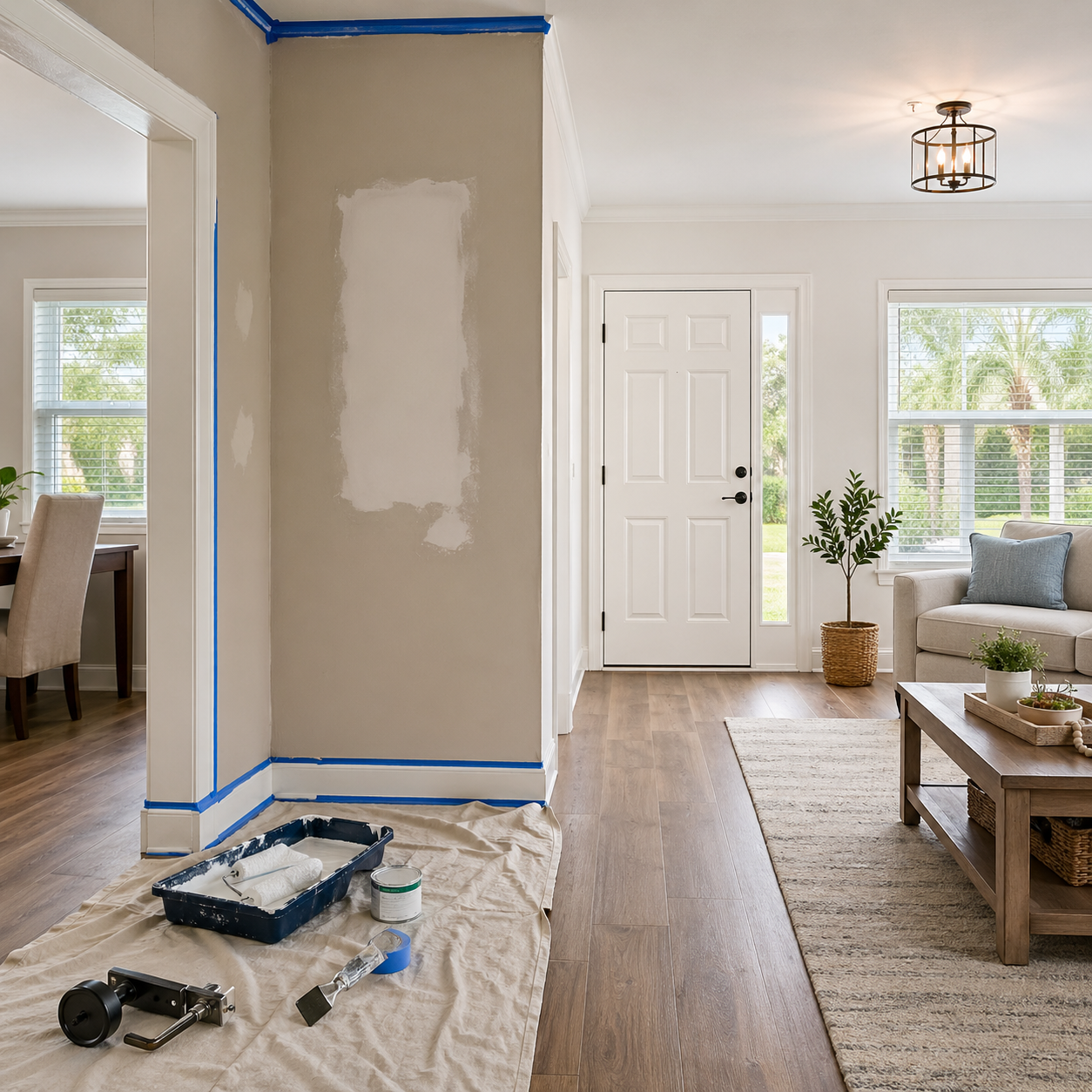
Because a wall installation is effectively a small framing or masonry project, it can also create finish work. Interior drywall, trim, texture, and paint may need to be repaired or recreated around the opening. On the exterior, siding, stucco, masonry, or other finishes need to be integrated neatly with the pet-door assembly.
Water Management Is Critical
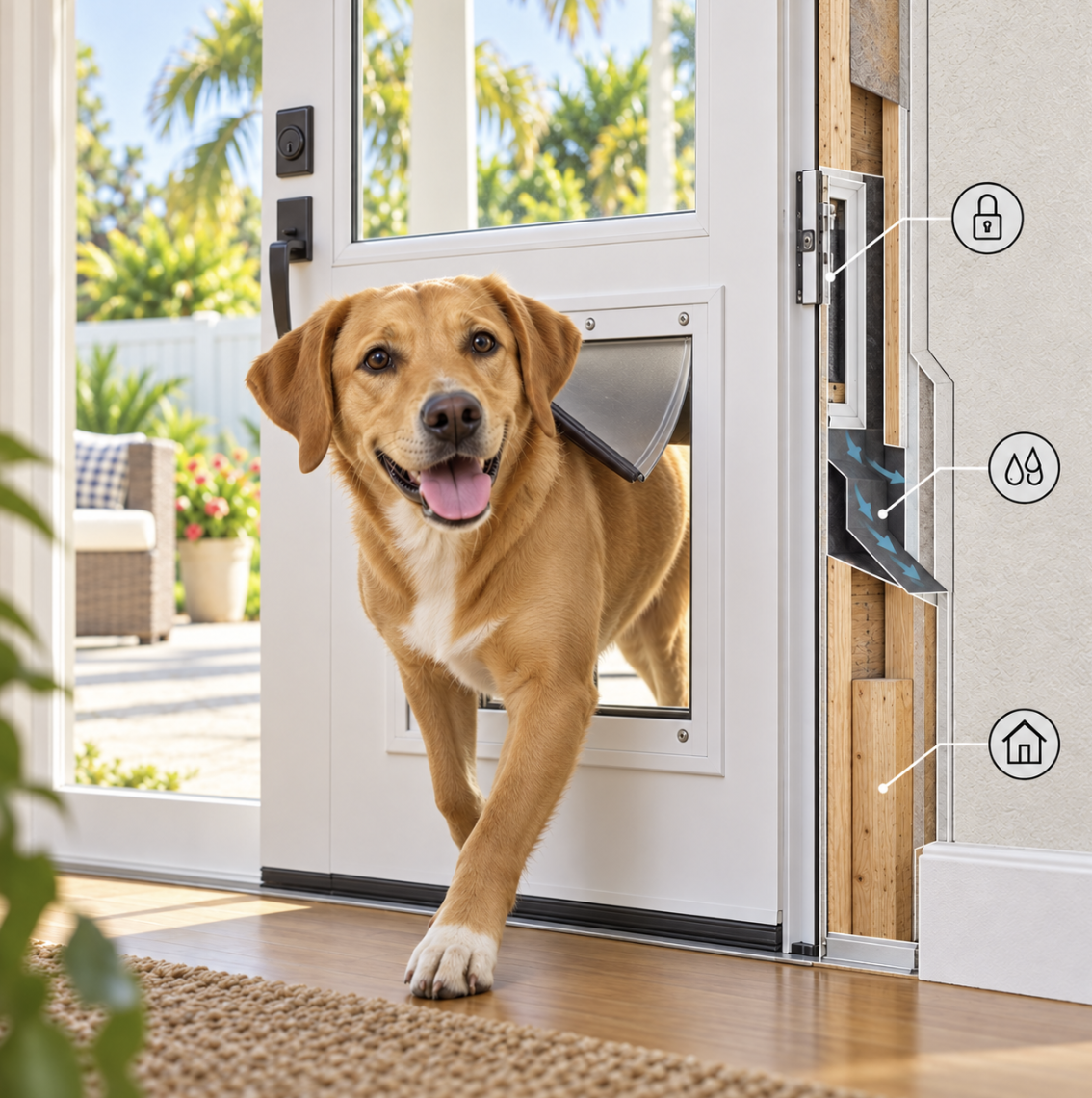
Water management becomes especially important when a pet door is installed through an exterior wall.
A tall exterior wall can collect a surprising amount of rainwater. During a Central Florida storm, that water can run down a large wall area directly toward the new opening.
For that reason, weatherproofing a wall-mounted pet door involves more than simply applying caulk around the perimeter. The installation needs to direct water around the opening rather than allowing it to work behind the exterior finish or into the wall.
Wind-driven rain can place even greater pressure on an exterior opening, making proper sealing, insulation, exterior detailing, and water management critical to a durable installation.
Some Walls May Not Be Suitable
Not every wall is an appropriate location for a pet door.
Some walls form part of a required fire-resistance or separation assembly, such as certain walls adjoining an attached garage. Creating a pet-door opening through one of these assemblies may interfere with its intended protection and may not be an appropriate installation location.
Electrical wiring, plumbing, structural framing, masonry reinforcement, and other concealed conditions also need to be considered before committing to a wall location.
Sliding Glass Door Pet Door Solutions
Sliding glass doors use tempered glass, so the existing glass cannot simply be cut in the field to accommodate a conventional pet door.
A common alternative is a vertical pet-door panel that fits into the existing sliding-door track.
These products are sometimes presented as simple inserts, but the finished installation can involve considerably more than placing the panel into the track.
The Original Lock No Longer Meets the Jamb
The pet-door insert sits between the sliding door and its original jamb.
That means the factory latch on the sliding door and the original latch plate no longer meet.
If the sliding door is to remain lockable, the locking system must therefore be modified or supplemented. The appropriate solution depends on the existing sliding-door design and the pet-door panel being installed.
Alarm Sensors May Need Modification
If the sliding door is connected to a home security system, adding the pet-door panel also changes the relationship between the door and its existing alarm sensors.
Those sensors may need to be repositioned, extended, or otherwise adapted so the alarm continues to recognize whether the door is open or closed.
Weather Sealing and Insulation
Adding an insert creates new joints around the pet-door panel and changes where the sliding door seals.
Factory weather stripping supplied with the panel does not necessarily match every existing sliding-door frame perfectly, so additional weather stripping, insulation, or sealing may be needed to reduce drafts, air leakage, insects, and moisture intrusion.
That matters particularly in Central Florida, where keeping hot, humid outside air from leaking into an air-conditioned home affects both comfort and energy efficiency.
Security, Weather and Storm Considerations
Any new opening through the exterior of a home deserves consideration from both a security and weather standpoint.
Larger pet doors naturally create larger openings. Location, accessibility from outside, construction of the surrounding door or wall, and the type of locking or closing system all matter.
Electronic pet doors can help control which animals use the opening, while rigid closing panels can physically block the opening when pet access is not needed. Some closing panels can also reduce air leakage and provide additional everyday weather protection.
In Central Florida, a closing panel may also be useful as part of storm preparation. However, a standard closing or security panel should not be assumed to provide hurricane or impact protection unless the manufacturer specifically rates it for that purpose.
For major storms, homeowners should understand what their particular pet door and closing panel are designed to withstand and determine whether additional protection is appropriate.
Pet-access control, physical home security, weather protection, and hurricane protection are related—but they are not necessarily the same thing.
Weatherproofing and Energy Efficiency
Central Florida puts exterior openings through demanding conditions: intense sun, high heat and humidity, heavy rainfall, wind-driven rain, insects, and a significant temperature difference between outdoors and an air-conditioned home.
A good pet-door installation should therefore address more than appearance.
The pet door needs to fit correctly, close and seal effectively, manage water appropriately for its location, and avoid unnecessary air leakage.
Energy-efficient pet doors may use multiple flaps, magnetic seals, insulated panels, or other features intended to provide better protection from outdoor conditions.
What Does Pet Door Installation Cost?
This is where the difference between buying a pet door and completing a pet-door installation becomes particularly important.
A homeowner may see an inexpensive pet door online and understandably wonder why the finished installation costs several hundred dollars. The pet-door unit itself, however, may be only one part of the project.
Door or wall construction, pet size, structural changes, framing, reinforcement, locking requirements, alarm sensors, interior and exterior finishing, insulation, and weather management can all affect the final cost. The original project guidance likewise recognizes substantial differences between straightforward door installations, framed-wall work, masonry work, replacement doors, and work involving structural or utility complications.
As a general budgeting guide, completed projects commonly fall within ranges such as:
- Standard solid exterior door: approximately $350–$900+ installed
- Screen, storm or porch door: approximately $300–$900+, depending on framing modifications, re-screening, reinforcement, and door construction
- Sliding-glass-door insert: approximately $450–$900+ installed, depending on the pet-door system, locking modifications, alarm sensors, and weather sealing
- Wood-framed exterior wall: approximately $600–$1,500+, depending on structural and finish work
- Concrete block or masonry wall: approximately $900–$2,000+, particularly where masonry cutting, structural support, and finish restoration are involved
- Replacement exterior door with an integrated pet door: approximately $1,200–$2,400+
Higher-end insulated or electronic pet doors can increase these ranges considerably.
The important comparison is therefore not simply:
“What does the pet door cost?”
A better question is:
“What will it cost to integrate this pet door properly into my home so it works, seals, locks, looks right, and does not create another problem?”
That is the cost of the actual project.
Long-Term Ownership
Like other exterior door components, pet doors benefit from occasional maintenance.
Flaps, magnets, seals, hinges, weather stripping, locking components, and removable security panels can wear with repeated use. Periodically checking that the pet door closes properly, remains securely mounted, and continues to seal well can help preserve comfort, security, and energy efficiency.
Finding the Right Pet Door Solution for Your Home
A pet door can provide tremendous convenience and give your dog or cat greater independence, but the best installation begins with choosing the right location and installation method, not simply selecting a pet door from a shelf.
A solid exterior door, screened porch, storm door, sliding glass door, wood-framed wall, and concrete block wall each present different considerations.
The lowest-priced pet door is not necessarily the lowest-cost solution once installation, security, weather protection, finish work, and long-term performance are taken into account.
House Doctors of Orlando can consider your pet’s size and mobility needs, the proposed installation location, the construction of your home, weather exposure, security needs, and the type of pet door you are considering. From there, we can help determine a practical installation approach and provide a clear estimate for the complete project.
Not sure which pet-door location makes the most sense for your home? House Doctors of Orlando can help you compare the options and identify an installation approach that works for your pet, your home, and your budget.
Already have a pet door in mind? Send us the product information and photos of the proposed installation area, and we can help determine the next step.