

Estimated Read Time: 5–7 Minutes
Why Hurricane Shutter Prep Matters in Central Florida
There is a moment before a Florida storm when preparation stops feeling optional. The grocery store is crowded. The gas line is longer than usual. The weather map is on every screen. At home, the garage is open, the shutters are heavier than you remembered, and nobody is completely sure which panel goes over the back slider.
That is when stress changes shape. It is no longer about the storm in the Gulf or the Atlantic. It is about your windows, your doors, your family, and whether the things you meant to handle months ago are still undone.
Storm shutters are supposed to bring peace of mind. But they only do that if the system is ready before Central Florida is in the cone.
During National Hurricane Preparedness Week, many homeowners focus on supplies: water, batteries, generators, food, and fuel. Those matter. But for Central Florida homeowners, one of the smartest forms of hurricane prep is making sure the home’s openings can be protected quickly when a storm approaches.
That means the measuring, cutting, labeling, fastener installation, storage, and installation plan need to be handled while the weather is calm — not when every homeowner in town is trying to solve the same problem.
In Central Florida, storms bring more than heavy rain. They bring wind-driven debris, sudden pressure changes, and long periods of wind and rain pushing against windows, doors, sliders, and exterior openings. Older windows are especially vulnerable. They do not only break because something hits them. They can also fail from wind pressure pushing against glass, frames, and older seals.
Properly installed shutters help reduce that direct pressure on the windows. They create a protective barrier in front of the opening, which helps reduce the stress placed on the glass and frame during storm conditions. They also help limit the risk of wind-driven debris striking the window directly.
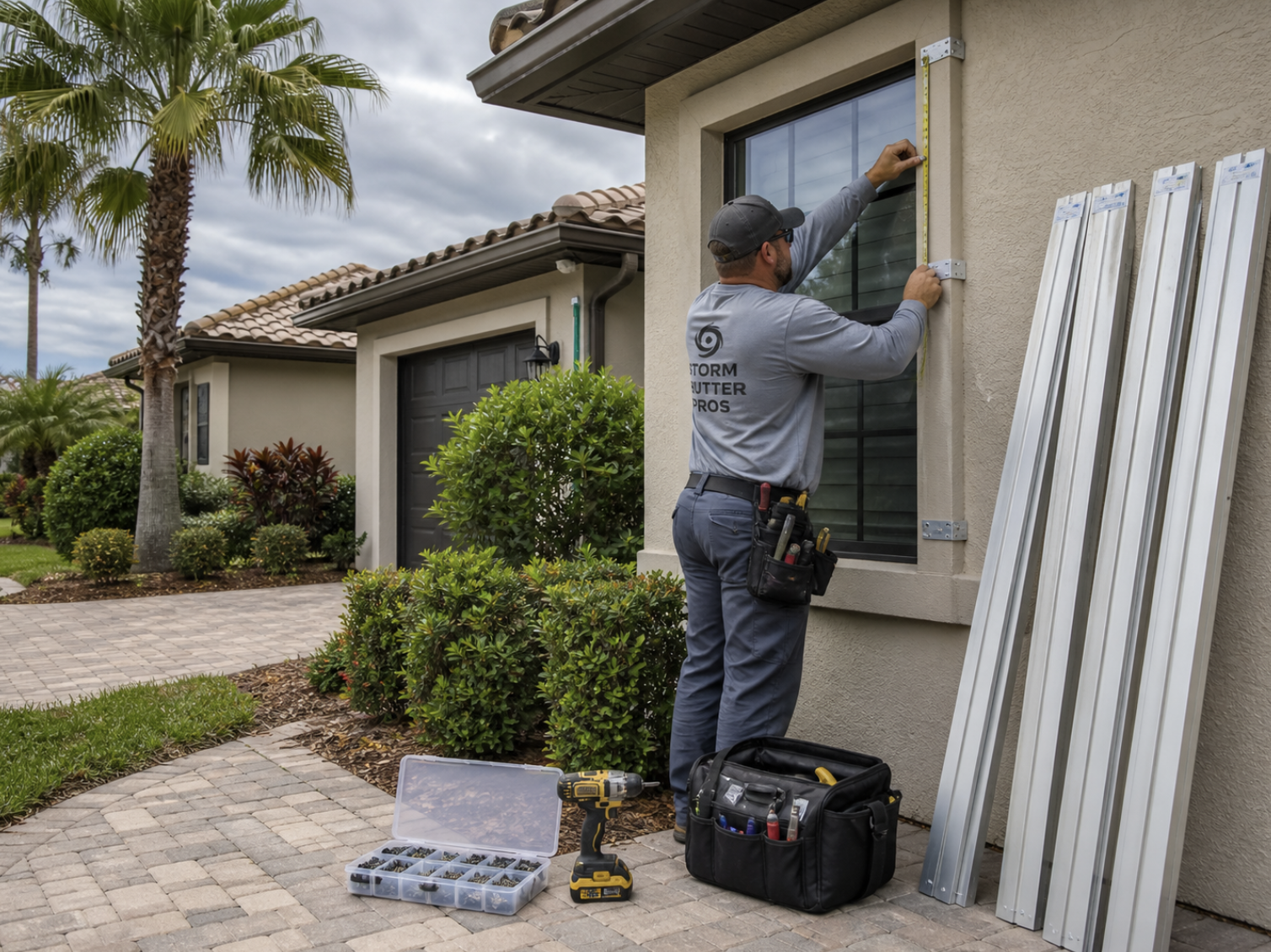
For many homeowners, House Doctors of Orlando can help with the work that makes storm prep faster later: measuring openings, cutting panels to size, pre-installing fasteners, labeling shutters, organizing hardware, and helping homeowners prepare for quicker installation before hurricane season gets serious.
Key Benefits
- Faster storm shutter installation when a storm is approaching because the measuring, cutting, and fastener work has already been handled
- Better protection for vulnerable openings, including windows, sliding glass doors, French doors, and entry doors
- Helps reduce direct wind pressure on older windows, not just the risk from flying debris
- Less confusion over which shutter panel fits which window, door, or slider
- More time to solve fit, access, hardware, or storage problems before contractor schedules fill up
- Easier annual hurricane prep because the shutter system is already organized
- Better chance of receiving a preferred installation slot if you sign up before storm demand spikes
- Less reliance on rushed plywood, temporary patches, or improvised last-minute storm prep
Potential Drawbacks to Consider
- Removable storm shutters still require storage space and physical installation before each storm
- Panels can be heavy, awkward, or difficult to handle without a clear plan
- Older Central Florida homes may have trim, stucco, siding, or window conditions that make fastener placement more involved
- Poorly labeled panels can slow down installation when time matters most
- Missing hardware, bent panels, stripped fasteners, or blocked access can turn a simple install into a stressful one
- Decorative shutters are not the same as rated hurricane shutters unless they are specifically designed and installed for storm protection
- Waiting until a storm is already in the forecast may limit available material, scheduling and installation time
Storm shutters are effective only when the whole system is ready. Owning the panels is one part. Having them properly fitted, accessible, labeled, and installable is what makes them useful when the weather turns.
What Drives the Cost of Hurricane Shutter Prep
Hurricane shutter prep costs vary because every home is different. A single-story block home with simple window openings is usually more straightforward than a two-story home with large sliders, unusual trim, arched windows, or difficult access.
The cost is often driven by:
Quantity of openings: More windows and doors mean more measuring, cutting, hardware, labeling, and installation time.
Shutter material: Aluminum panels, steel panels, and clear polycarbonate panels have different handling, cutting, storage, and hardware needs.
Fastener installation: Pre-installing anchors, bolts, tracks, or other attachment points is one of the most important parts of early prep. Once fasteners are installed properly, storm installation can move much faster.
Opening size and shape: Large sliders, wide windows, arched openings, and tight trim conditions may require more careful fitting.
Age and condition of windows: Older windows may be more vulnerable to storm pressure, frame movement, worn seals, or water intrusion. Shutters help reduce direct pressure on the window, but the surrounding opening still needs to be evaluated.
Home exterior condition: Stucco cracks, loose trim, soft wood, damaged siding, or deteriorated exterior materials can complicate fastener placement.
Access: Second-story openings, tight side yards, landscaping, pool enclosures, and patios can make the work more involved.
Organization: Labeling panels, grouping hardware, and creating a clear storage plan adds value because it saves time later.
This is where homeowners are often surprised. The visible panel is only one part of the job. The real value is in making sure each opening has the right panel, the right fasteners, and the right plan for quick installation.
Typical Cost Breakdown
At the time of publishing, hurricane shutter preparation is usually priced based on the number of openings, shutter type, fastener method, access, and whether panels already exist or need to be measured, cut, or fitted.
Typical cost categories include:
Shutter measuring and layout: Each window, door, and slider needs to be measured correctly. This is especially important for removable storm panels, where one wrong measurement can delay installation later.
Panel cutting and fitting: Panels may need to be cut or adjusted to match specific openings. Large sliders, irregular trim, and unusual window shapes can require more time.
Fastener or anchor installation: This is one of the most valuable parts of early prep. Pre-installed fasteners turn storm installation into a faster deployment process instead of a last-minute setup project.
Sliding glass door protection: Many Central Florida homes have large rear sliders, patio doors, or glass doors. These openings are larger than standard windows and often need more careful planning.
Labeling and organization: Each panel should be clearly marked for its matching opening. Hardware should be grouped and easy to find.
Storage planning: Shutters should be stored in a dry, accessible place where they will not be buried behind garage clutter when a storm is approaching.
Pre-storm installation service: Homeowners who prepare ahead may be able to secure preferred installation slots when a storm approaches because the system is already ready to deploy.
Clear polycarbonate panels: These can cost more than opaque metal panels, but they may be worth considering for one or more key openings where natural light would help during a power outage.
Cost can increase when old hardware is missing, panels are damaged, exterior surfaces need attention, or multiple openings require custom fitting. In many cases, the smarter investment is doing the setup correctly before hurricane season instead of paying for rushed problem-solving during the storm rush.
Common Hurricane Shutter Options & Choosing the Right System
Not every home needs the same shutter system. The right choice depends on budget, appearance, storage space, ease of installation, and how much work the homeowner wants to do when a storm is approaching.
Removable storm panels are common in Central Florida because they provide practical protection without permanently changing the appearance of the home. These may include aluminum panels, steel panels, or clear polycarbonate panels.
They are often a good middle-ground option, but they need proper setup. Panels must be measured, cut, labeled, stored, and attached with the right hardware. If that prep is skipped, installation can become slow, frustrating, and less reliable.
Accordion shutters are permanently mounted beside the opening and can be closed more quickly. They are convenient, especially for homeowners who want less physical setup before a storm. The tradeoff is higher upfront cost and a more visible exterior look.
Bahama shutters are hinged above the window and can provide shade as well as storm protection when rated for that purpose. They may work well for some homes, but decorative versions should not be assumed to provide hurricane protection.
Colonial shutters mount on the sides of windows and can add curb appeal. Like Bahama shutters, they must be properly rated, selected, and installed for storm protection, not just appearance.
Plywood panels are sometimes used in emergencies, but they are usually a last-minute solution. They can be heavy, difficult to store, hard to install correctly, and less convenient year after year. For many homeowners, a properly planned storm panel system is easier to manage long term.
For many Central Florida homeowners, removable storm panels are the practical choice. They can help protect openings from debris and reduce direct wind pressure on older windows, but only if the system is ready before Central Florida is watching the forecast cone.
Do Not Forget Natural Light
One often-overlooked detail is how dark a home can become once storm panels are installed. Traditional opaque metal panels can make the house feel like a bat cave at the exact moment you may not have power for lights.
For that reason, many homeowners should consider using at least one strategically placed clear polycarbonate storm panel. These panels typically cost more than standard metal panels, but they can allow natural light into a key area of the home during a power outage.
A good location may be a main living area, kitchen, hallway, or another central space where daylight would make the home safer and more comfortable while shutters are installed.
The goal is not to make every opening clear. It is to think ahead about where natural light will matter most if the power goes out.
Decision Guide: Should You Prep Hurricane Shutters Now or Wait Until a Storm Is Forecast?
If your shutters are not measured or cut yet, start now
Measuring and fitting take time. Waiting until a named storm is approaching can create avoidable pressure and delays.If your fasteners are not installed, do that before storm season gets busy
Pre-installed fasteners are what make later installation faster. Without them, the job is much more involved when time is limited.If you have older windows, do not think only about flying debris
Older glass, frames, seals, and openings can also be stressed by storm pressure. Shutters help create a barrier that reduces direct wind pressure on the window.If you already own panels, make sure they are labeled
Each shutter should match a specific opening. Labels like “Front Bedroom Left,” “Kitchen Window,” or “Rear Slider” can save valuable time.If your hardware is loose, missing, or mixed together, organize it now
Fasteners, wing nuts, bolts, anchors, and tools should be easy to locate. A missing hardware bag can slow everything down.If your shutters are buried in the garage, create quick access
Shutters should not be trapped behind holiday decorations, storage boxes, or heavy equipment when a storm is two days away.If you live in an HOA community, check the rules early
Some neighborhoods may have guidelines for exterior hardware, shutter type, or visible mounting systems. It is better to know before you need the shutters installed.If you want help installing before a storm, sign up early
House Doctors of Orlando can install shutters much faster for homeowners who prepare ahead of time. When panels are already measured, cut, labeled, and fastener-ready, storm installation becomes a deployment job instead of a last-minute setup project.If you are choosing panel materials, think about light during a power outage
Opaque panels can make the home very dark once everything is covered. Consider at least one strategically placed clear polycarbonate panel to allow natural light into an important area of the house.
The best time to solve shutter problems is when the sky is calm, not when Central Florida is already preparing for impact.
Long-Term Ownership & Maintenance
Hurricane shutters should be checked every year before hurricane season. Even if they worked well last year, storage, humidity, rust, missing hardware, or home repairs can change the setup.
At least once a year, homeowners should:
Pull out the panels and make sure they are still labeled
Check for bent, damaged, or missing shutters
Confirm that fasteners are still secure and usable
Make sure hardware bags are complete
Clear access to the storage area
Look for exterior changes that may affect fit
Review which openings need professional installation help
Pay special attention to large openings like sliding glass doors
Check older windows for loose frames, failed seals, or signs of past water intrusion
Central Florida’s heat, UV exposure, humidity, and heavy summer rain are hard on metal, fasteners, labels, storage bins, and exterior surfaces. A shutter system that is ignored for years may not be ready when it matters.
Good storage also matters. Panels should be kept dry, organized, and accessible. Hardware should be stored in labeled containers or bags. A simple opening map can help, especially for larger homes, rental properties, or homes with multiple similar windows.
Storm shutter prep is not just about protection. It is about reducing stress when everyone else is rushing.
Conclusion
Hurricane shutters are one of the most practical ways to help protect a Central Florida home, but they work best when the hard part is done early.
The real preparation happens before the forecast cone appears. That means measuring each opening, cutting panels correctly, installing fasteners, labeling shutters, organizing hardware, and storing everything where it can be reached quickly.
It also means understanding the real risk. Windows and doors are not only vulnerable to flying debris. Older windows can also be stressed by storm pressure, worn seals, frame movement, and wind-driven rain. Properly fitted shutters help reduce that direct pressure and give the home’s openings an added layer of protection.
When a storm approaches, installation time becomes limited. Homeowners who wait may find that materials, hardware, and contractor availability are already stretched thin. Homeowners who prepare ahead are in a much better position.
House Doctors of Orlando can help Central Florida homeowners get their hurricane shutter systems ready before storm season gets serious. From panel fitting and fastener installation to labeling, storage planning, and preferred installation scheduling, early preparation can make storm protection faster, cleaner, and far less stressful.