

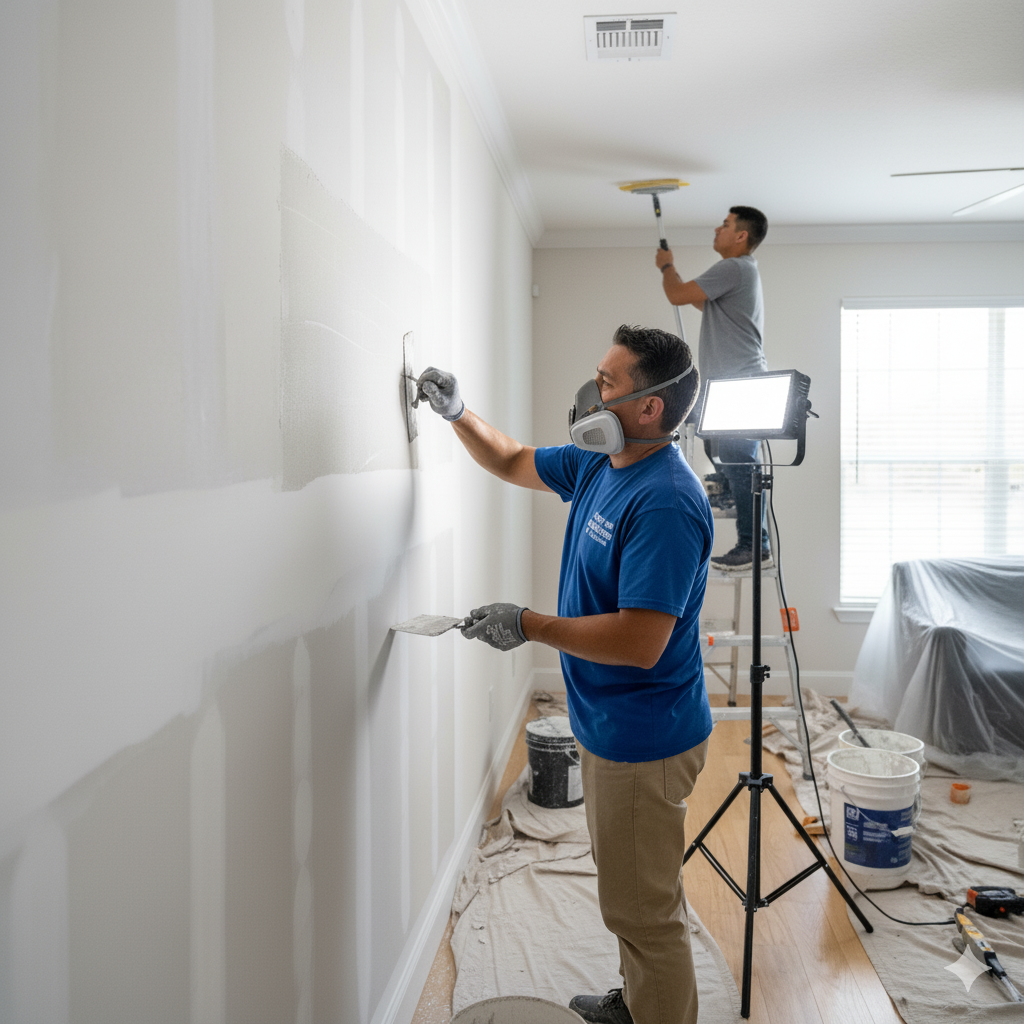
Drywall is the backbone of most interior walls and ceilings in Central Florida homes. From small dents to water damage, the condition of your drywall has a direct impact on how your home looks and feels. In a humid climate like ours, drywall is also one of the most vulnerable building materials.
At House Doctors of Orlando, we help homeowners address drywall issues quickly and professionally, preventing small problems from turning into costly repairs.
Why Drywall Services Matter in Central Florida
- Humidity & Leaks: Florida’s moisture can cause drywall to swell, stain, or crumble when exposed to water.
- Storms & Roof Leaks: Wind-driven rain often leads to ceiling and wall damage that requires replacement.
- Daily Wear & Tear: From furniture dings to kids’ roughhousing, drywall gets plenty of abuse.
- Porch & Lanai Issues: Many homes built from the 1980s onward were finished with regular drywall and interior joint compound on exterior porches or lanais. In these semi-outdoor spaces, humidity and rain exposure degrade paint, weaken joints, and cause drywall to fail. Proper repairs in these areas often require removing and replacing the material with exterior-rated products such as cement board or exterior gypsum for lasting results.
- Health Risks: Damp drywall can harbor mold. According to the U.S. Environmental Protection Agency (EPA), indoor mold exposure is linked to respiratory issues, asthma, and allergic reactions.
Key Benefits
- Restores Appearance: Smooth walls and ceilings improve the look of every room.
- Protects Structure: Replacing damaged sections prevents moisture from spreading into studs or insulation.
- Supports Home Value: Buyers notice wall condition immediately during showings.
Potential Drawbacks to Consider
- Disruption: Repairs often involve dust, noise, and moving furniture.
- Hidden Damage: A small stain may reveal larger water intrusion issues behind the wall.
- Older Homes and Asbestos: In homes built before 1980, certain finishes — such as popcorn ceilings or older joint compounds — may contain asbestos. In these cases, specialized testing and remediation may be required before repair or replacement.
- Insurance: Cosmetic cracks are not covered, but water damage repairs may be if the cause (like a roof leak) is covered. Always check your policy.
What Drives the Cost of Drywall Services
- Size of Repair: Small patch vs. full wall or ceiling section.
- Location: Ceilings and hard-to-reach areas require more labor.
- Texture Matching: Florida homes often use knockdown or orange peel textures that require special blending.
- Cause of Damage: Water intrusion or mold remediation increases complexity.
- Finishing Level: The chosen drywall finish level directly affects both time and cost.
Understanding Drywall Finish Levels (1–5)
In the drywall trade, finish quality isn’t just about how smooth the surface looks — it’s measured by national standards set by the Gypsum Association (GA-214). These finish levels determine how many coats of compound are applied, how smooth the surface should be, and how much imperfection is acceptable.
In Central Florida’s humid climate, where lighting, texture, and paint sheen vary widely, choosing the right finish level can make a noticeable difference in both appearance and cost.
Level 1 – Basic Tape Seal (Fire-Tape)
- Joints and corners are taped but not smoothed.
- Visible tool marks and ridges are acceptable.
- Commonly used in attics, garages, and concealed areas above ceilings or behind mechanical chases.
Level 2 – Utility or Substrate Finish
- One coat of joint compound is applied over joints and fasteners.
- Surface imperfections are acceptable.
- Typically used behind tile, paneling, or in unfinished storage areas.
Level 3 – Textured Base Coat
- Joints receive two coats of compound, fasteners one.
- Designed as a base for heavy textures such as knockdown or orange peel, both common in Central Florida homes.
- Minor tool marks and ridges are acceptable because texture will conceal them.
Level 4 – Standard Residential Smooth Finish
- Joints and fasteners are coated three times and sanded smooth.
- Ready for flat or low-sheen paint.
- Minor blemishes, joint visibility, or sanding marks may still appear under glancing light or glossy paint — this is normal per GA-214 standards.
- Level 4 is the industry standard for most painted walls and ceilings throughout Central Florida homes.
Level 5 – Premium Skim-Coat Finish
- A thin skim coat of joint compound is applied over the entire surface after Level 4 preparation.
- Produces a uniform, flawless surface ideal for gloss, semi-gloss, or high-lighting conditions (like recessed ceiling lights or accent walls).
- The most refined and light-resistant finish available, recommended for premium interiors or modern homes emphasizing smooth, clean lines.
In summary:
- Level 3 – Best for textured finishes (Good)
- Level 4 – Standard smooth paint finish (Better)
- Level 5 – Flawless, high-end result (Best)
Choosing the right finish depends on your lighting conditions, paint type, and budget. In most Central Florida homes, Level 3 suits textured walls, Level 4 is perfect for living areas, and Level 5 is reserved for feature rooms or luxury applications where perfection matters.
Typical Cost Breakdown
(At the time of publishing)
- Minor Patches: $150 – $350 (holes up to 6 inches).
- Medium Repairs: $400 – $750 (sections of wall or ceiling up to 4x4 feet).
- Large Repairs: $800 – $2,500 (multiple areas or full wall sections).
- Ceiling Repairs: +15–25% due to access difficulty.
- Level 4–5 Finishes: Add $1.50–$3.50 per sq. ft. depending on surface area and paint readiness.
- Hidden Costs: Mold remediation, insulation replacement, or painting beyond patch area can add $250 – $1,000.
Common Drywall Options & Choosing the Right System
- Standard Interior Drywall (½” or ⅝”) – Most common for living areas.
- Moisture-Resistant (Green Board) – For bathrooms, laundry rooms, and kitchens.
- Mold-Resistant (Purple Board) – Recommended in humid Central Florida environments.
- Fire-Rated (Type X) – Required by code for garages or shared walls.
- Exterior Gypsum or Cement Board – For porches, lanais, and semi-outdoor areas exposed to humidity or temperature swings.
Decision Guide: Which System Fits Your Needs?
Assess the Damage Size:
Small hole or dent: Quick patch.
Larger area or multiple spots: Section replacement.Determine the Cause:
Water or mold damage requires full replacement and structural inspection.Decide on Finish Quality:
Level 3: Standard textured finish.
Level 4: Smooth, paint-ready.
Level 5: Premium aesthetic finish.
Consider Location:
Interior vs. semi-exterior (porch or lanai) determines drywall type.Add-On Work:
Texture, paint matching, or insulation replacement can be combined during the same visit.
Long-Term Ownership & Maintenance
- Regular Checks: Inspect ceilings and wall bottoms after storms for early signs of water intrusion.
- Maintain Paint: Properly sealed and painted drywall resists moisture better.
- Ventilation: Use exhaust fans in humid rooms to prevent moisture buildup.
- Insurance Factor: Document water damage quickly. Many insurers require proof that the damage was sudden, not gradual neglect.
Conclusion
Drywall may not be glamorous, but it plays a vital role in the safety, comfort, and appearance of your home. Addressing damage early prevents bigger issues and ensures your walls look and perform their best.
At House Doctors of Orlando, our drywall specialists handle everything from small patches to full replacements — including Level 3 to Level 5 finishes for a seamless, lasting result.
Contact us today for a free consultation and let us restore your walls and ceilings to like-new condition.