

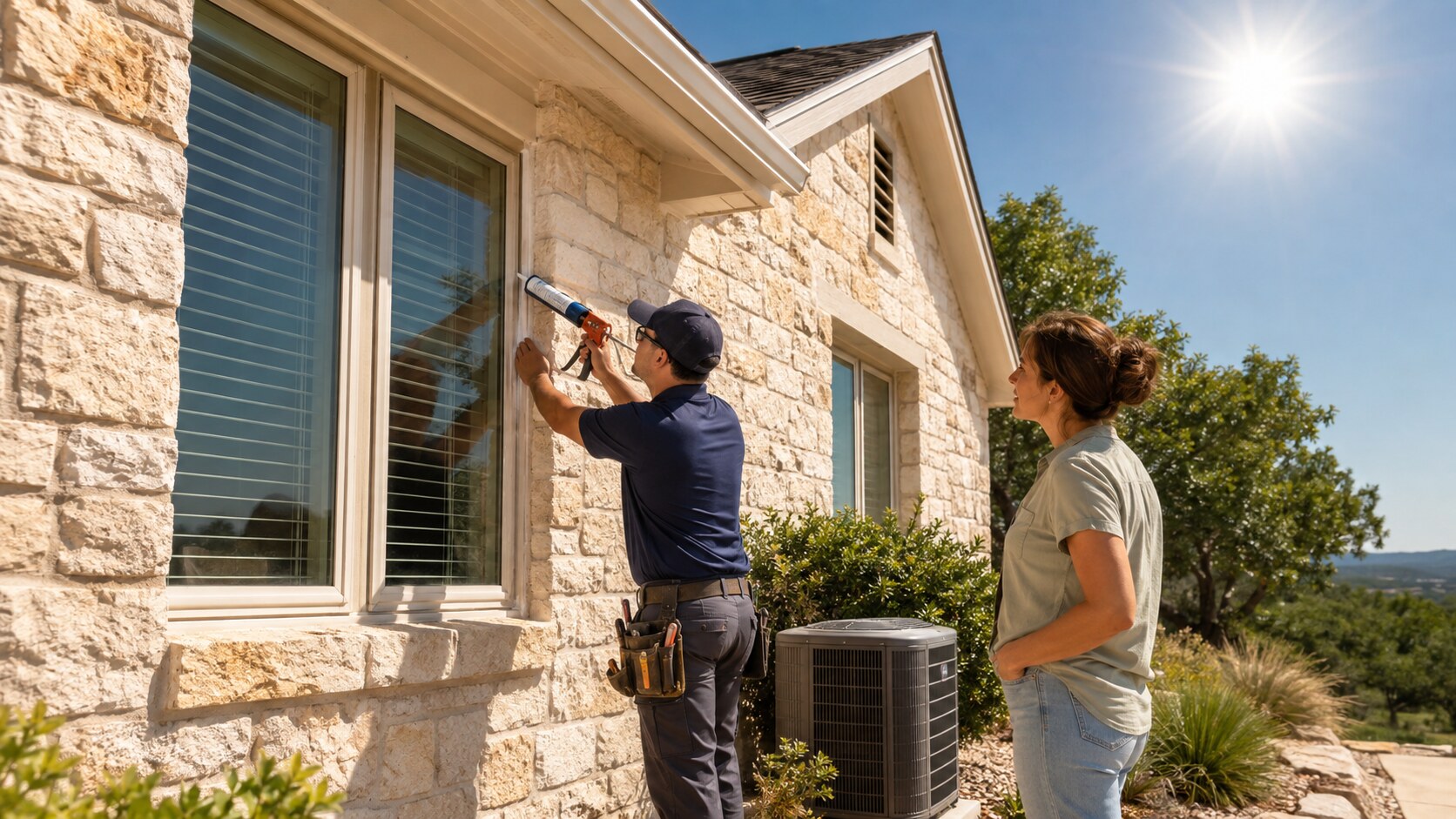
Austin summers are not something you ease into. By mid-June, daily highs routinely hit the upper 90s, and strings of 100°F-plus days are common by July and August. Every vulnerability in your home's envelope — every gap, worn seal, or inch of inadequate insulation — translates directly into discomfort and higher utility bills. A few hours of attention in the spring can make a meaningful difference in how your home performs all summer long.
Start With Your HVAC System
Schedule Your Annual AC Tune-Up Now
HVAC technicians in Austin are swamped from May through September. If you wait until your system is struggling, you may be looking at a week-long wait in the middle of a heat wave. A spring tune-up includes cleaning coils, checking refrigerant levels, inspecting components, and clearing the condensate drain.
Other HVAC Prep Steps
- Replace your air filter before cooling season begins, and plan to change it monthly during peak summer.
- Flush the condensate drain line with diluted bleach or white vinegar to prevent algae clogs.
- Ensure your outdoor condenser has at least two feet of clearance on all sides.
Air Seal Your Home
Air sealing is unglamorous work, but it's one of the most cost-effective things you can do. Every gap in your home's envelope allows hot, humid outdoor air to infiltrate and forces your AC to work harder.
- Check weatherstripping on all exterior doors — if you can see light around the frame, hot air is coming in.
- Caulk around windows, especially where window frames meet the siding or brick.
- Seal around utility penetrations where pipes, wires, and conduits pass through exterior walls.
- Address your attic hatch or pull-down stairs — these are notoriously leaky and poorly insulated.
Evaluate Your Attic Insulation
On a 100°F day, attic temperatures can reach 150–160°F. Without adequate insulation, that heat radiates through the ceiling into your living space, dramatically increasing the cooling load on your AC.
- Austin Energy recommends R-38 to R-60 insulation for attics in Central Texas — roughly 10–16 inches of blown cellulose or fiberglass.
- Seal any attic air leaks before adding insulation — insulation slows heat transfer but doesn't stop air movement.
- Make sure attic vents are unobstructed — proper soffit and ridge venting allows hot air to escape rather than building up.
Prepare Your Exterior
- Inspect and re-caulk exterior wood trim before the summer storm season kicks off.
- Get a roof inspection done in spring rather than waiting for a storm to reveal a problem.
- Clean gutters — Central Texas storm cells can dump 2–3 inches of rain in a matter of hours.
Prepare Your Outdoor Living Spaces
- Check your deck or covered patio for loose boards, popped fasteners, rot at post bases, and soft spots.
- Tighten your outdoor ceiling fans — a wobbling fan means mounting hardware has loosened.
- Make sure all outdoor outlets have functioning GFCI protection.
A Note on Austin's Power Grid
Summer peak demand is the most consistent stress on ERCOT. When everyone's AC is running simultaneously during a 104°F heat wave, demand approaches available capacity. Install a programmable or smart thermostat if you don't have one, and keep your AC filter clean so the system runs efficiently during peak load.
Let Us Help You Get Ready
A spring home walkthrough with the House Doctors team can identify the issues most likely to cause problems this summer. We handle air sealing, weatherstripping, caulking, exterior repairs, and a range of other summer-prep tasks in a single visit.
Call us at (737) 371-8827 or visit https://www.housedoctors.com/austin-tx/contact-us/ to schedule your summer prep appointment.
House Doctors of Austin is a locally owned and operated handyman, home repair, and home renovation service serving Austin and the surrounding Central Texas area.