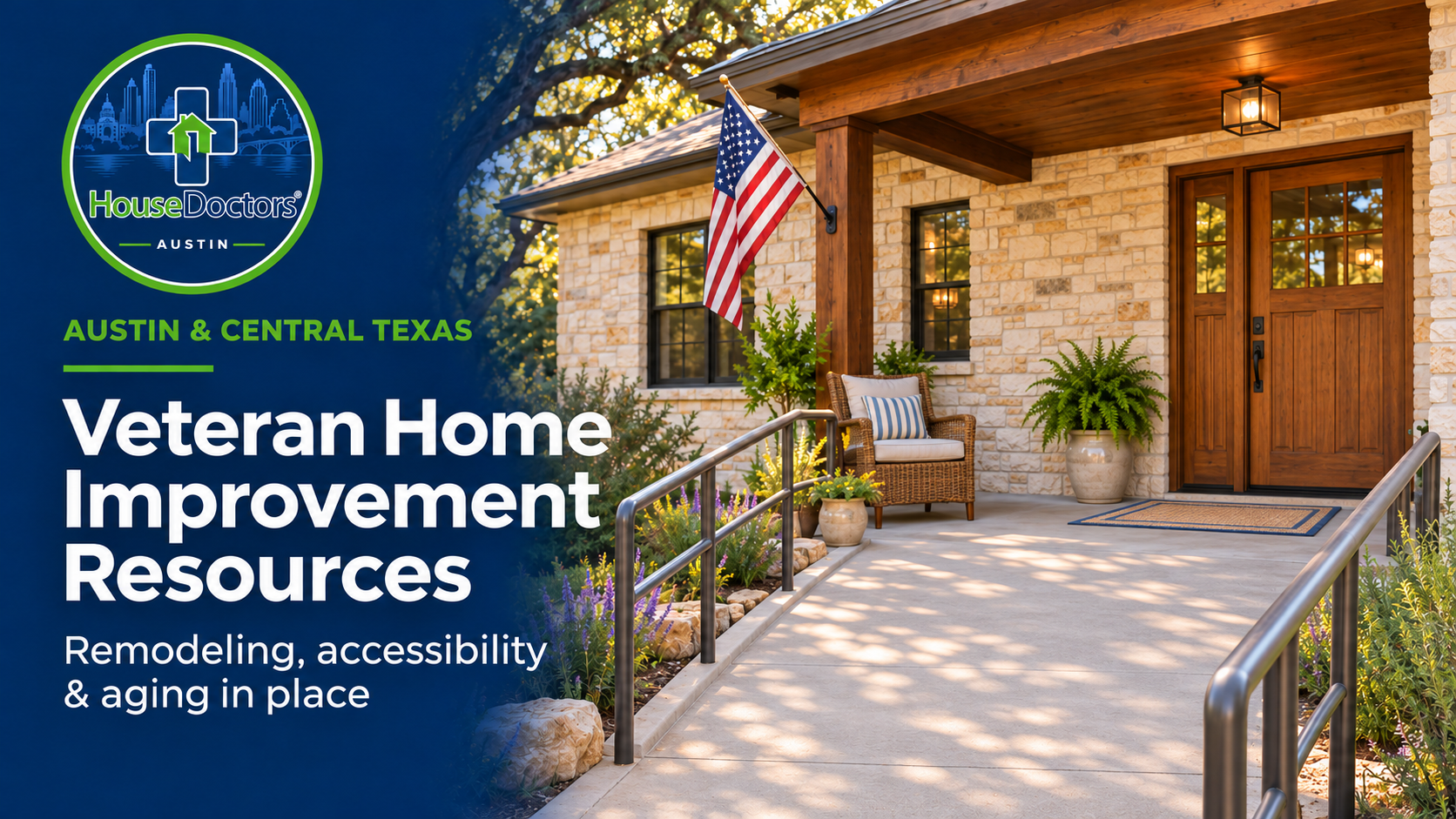
For many veterans, staying at home means staying close to family, neighbors, and the routines that make life feel familiar. But a high bathtub wall, narrow doorway, or deteriorating roof can make a beloved home harder to use and maintain.
Veterans in Austin and Central Texas may qualify for help with home repairs, accessibility remodeling, and modifications that support aging in place. Resources include VA benefits, Texas assistance programs, and local nonprofit services. Eligibility varies by program and may depend on disability, medical need, income, age, homeownership, or location.
The first step is to match the project to the right resource. A medically necessary shower modification, an urgent roof repair, and a kitchen renovation may follow very different funding paths.
Where veterans can start looking for home improvement help
Resource | Potential fit | First contact |
VA SAH SHA and TRA | Adaptations for specific service-connected disabilities | VA housing grants team |
VA HISA | Medically necessary home modifications | VA care team and Prosthetics |
Texas veterans assistance | Necessary repairs and accessibility work | TVC-funded local provider |
City and state accessibility programs | Households meeting age or disability and income rules | Austin Housing or a TDHCA provider |
Nonprofit repairs and ramps | Safety and access needs with financial hardship | The organization or a qualified referrer |
USDA Section 504 | Repairs to qualifying rural homes | USDA Rural Development |
These programs have different application and approval processes. Confirm eligibility, available funding, and contractor requirements before committing to work you hope a program will pay for.
VA adapted housing grants for qualifying disabilities
The VA offers three related housing grants for veterans and service members with specific qualifying service-connected disabilities:
Specially Adapted Housing or SAH can help eligible applicants buy, build, or modify a permanent home they own or will own.
Special Home Adaptation or SHA supports adaptations for a different set of qualifying disabilities. The home may be owned by the applicant or a family member.
Temporary Residence Adaptation or TRA may help modify a family member's home where an eligible veteran is living temporarily. Applicants must qualify for SAH or SHA.
These benefits can support substantial accessibility changes, but a disability rating alone does not establish eligibility. Each program has specific disability and ownership requirements.
Review the VA disability housing grants page for eligibility and the current fiscal year's funding limits. Applications for SAH and SHA can be submitted through the VA application process, including VA Form 26-4555.
VA HISA benefits for medically necessary home modifications
The Home Improvements and Structural Alterations benefit, commonly called HISA, helps eligible veterans make medically necessary changes to their primary residence. Examples include accessible bathing facilities, permanent entrance ramps, and modifications that make kitchen or bathroom fixtures reachable.
VA lists lifetime benefits of up to $6,800 or $2,000, depending on eligibility. Certain non-service-connected conditions may qualify, so ask your VA care team rather than assuming a condition must be related to military service.
HISA is not a general remodeling allowance. Routine roof replacement, ordinary HVAC replacement, and cosmetic updates are outside its purpose.
Start with your VA care team and local Prosthetic and Sensory Aids Service. The application includes a prescription written or approved by a VA physician, VA Form 10-0103, an itemized estimate, and a photograph of the existing area. Renters also need signed, notarized owner authorization.
Texas veterans assistance and local home repair organizations
The Texas Veterans Commission's Housing for Texas Heroes program supports eligible low-income veterans and surviving spouses through funded organizations. Assistance can address accessibility barriers, dangerous housing conditions, and weather-related damage. Veterans seek help through participating providers; the program is not an unrestricted remodeling check issued directly to every veteran.
Use the Texas Veterans Commission's assistance resources to locate organizations serving your county and ask about current Housing for Texas Heroes funding. Published program requirements explain the focus on necessary repairs and modifications.
Several Central Texas organizations are also useful starting points, with assistance subject to their own funding and eligibility rules:
Rebuilding Together Austin San Antonio offers free critical repairs and accessibility modifications to eligible homeowners. Its Austin-area service counties include Travis, Williamson, and Hays. Applicants must own and occupy the home, meet household income requirements, and meet property-tax requirements. Availability varies by county and funding.
Meals on Wheels Central Texas provides major safety repairs and accessibility improvements for eligible homeowners. Its services can include roofing, plumbing, electrical work, ramps, and bathroom modifications. The home repair program currently lists a waiting list for new applicants; contact it for current eligibility and timing.
Easterseals Lonestar's Home Modification Program assists qualifying households in Austin and veterans in qualifying Central Texas counties. Ask about its income and disability requirements, service area, and available repair or accessibility funding.
Contact these organizations before hiring someone for a project you hope they will fund. A provider may arrange the work through its own contractors or volunteers.
Austin and Texas accessibility assistance beyond veteran benefits
Veterans can also qualify for programs open to the broader community. These options are useful when a household does not meet a particular VA grant's disability requirements.
City of Austin Architectural Barrier Removal
Austin's Architectural Barrier Removal program offers eligible households up to $20,000 in accessibility improvements at no cost. Projects can include ramps, bathroom modifications, and doorway widening.
The city lists these core requirements: the home must be within Austin's full-purpose city limits; the applicant must be at least 62 or meet the program's physician-verified severe-disability criteria; and household income must be at or below 80% of Median Family Income. Both homeowners and renters may qualify, with landlord approval required for renters.
An Austin mailing address does not establish eligibility. Ask Austin Housing to verify the address and current requirements. Residents of Round Rock, Cedar Park, Pflugerville, and other nearby communities should check programs serving their own jurisdiction.
Amy Young Barrier Removal Program
The Texas Department of Housing and Community Affairs' Amy Young Barrier Removal Program provides one-time grants of up to $22,500 for qualifying accessibility and hazard-removal work. It serves eligible households that include a person with a disability, with income at or below 80% of Area Median Family Income. Homeowners and tenants may qualify.
Assistance is administered through local organizations and is not available in every area. Search Help for Texans under home repair and accessibility modifications to identify a provider serving your city or county.
Wheelchair ramps through the Texas Ramp Project
The Texas Ramp Project is another resource for people with a documented medical need for a ramp and financial hardship that prevents them from affording one.
Requests must come from an authorized healthcare professional, social service agency, or other qualified referring organization. Individuals and families should ask an eligible professional or organization to submit the referral on their behalf. Service coverage and waiting times vary.
USDA home repair assistance for eligible rural homes
Veterans living outside Austin's urban core may want to check USDA Section 504 Home Repair loans and grants in Texas. This program is open to qualifying rural homeowners and is not limited to veterans.
USDA lists repair loans of up to $40,000 and grants of up to $10,000. Loans must be repaid. Grants focus on removing health and safety hazards and require applicants to be at least 62 and meet very-low-income limits. Applicants must own and occupy the home, meet the applicable income criteria, and be unable to obtain affordable credit elsewhere. Grants generally must be repaid if the property is sold within three years.
Have USDA check the property's exact address, household eligibility, and current terms. A home being outside Austin city limits does not automatically make it eligible.
A change to know about Texas veterans home improvement loans
Older resource lists may recommend the Texas Veterans Land Board's Veterans Home Improvement Program. A Texas Register notice published in August 2026 reports that the board voted on July 28, 2026, to discontinue offering these loans.
Do not build a remodeling budget around older advertisements for this program. Check directly with the Veterans Land Board for any subsequent changes or replacement options.
Plan upgrades around aging and thriving in place
The most useful home improvements begin with how someone wants to live. That might mean bathing with greater independence, preparing dinner comfortably, welcoming grandchildren, or getting outside to see friends.
For a veteran considering accessibility remodeling in Austin, useful questions include:
Can I enter and leave the home comfortably with the mobility equipment I use?
Can I reach the bathroom, use the shower, and move around essential fixtures?
Are frequently used cabinets, controls, and appliances within comfortable reach?
Does the layout leave enough room for assistance from a family member or caregiver?
Which changes would help now, and which could be included in a future remodel?
An accessible bathroom remodeling plan might include a lower shower threshold, properly supported grab bars, seating, improved lighting, and more usable floor space. The right combination depends on the person, the home, and any clinical recommendations.
For a larger interior remodeling project, consider the entire route between the entrance, bedroom, bathroom, kitchen, and shared living areas. Improving one room has limited value if a doorway or step still blocks access to it.
Discuss disability-related design needs with an occupational therapist or other appropriate healthcare professional. A contractor can then translate those recommendations into a defined construction scope. Some work may qualify for assistance, while preferred finishes or other additions may require a separate budget.
How to move from a resource list to a workable project
Write down the daily problem. Describe what is difficult, where it happens, and what would make the space more usable. Photos of existing conditions can help.
Check the program before committing to construction. Ask about eligibility, approval timing, required inspections, contractor selection, and whether work started before authorization can be covered.
Gather the requested documents. Depending on the program, these may include service records, income information, ownership documents, landlord permission, or medical documentation. Confirm the exact list with the administrator.
Request a clear written scope and estimate. Identify labor, materials, and any applicable permit or inspection costs. Ask the program administrator to distinguish approved work from any additional improvements you would pay for yourself.
Coordinate funding and scheduling. If more than one program may help, disclose the other assistance and ask how costs must be allocated. Confirm who pays the contractor, when payment occurs, and whether the home will remain usable during construction.
For help understanding VA benefits, Travis County Veterans Services provides free assistance through VA-accredited staff. Travis County residents and employees can request an appointment or call 512-854-9340. Veterans in other counties can begin with their county veterans service office.
Common questions about veteran home remodeling assistance
Will a veteran benefit pay for a complete kitchen or bathroom remodel
Coverage depends on the program and approved scope. Accessibility or safety work may qualify, but cosmetic upgrades are not automatically covered. Ask the administrator to review the proposed work before signing a construction agreement.
Do all programs require a service connected disability
No. Some VA housing grants do, while other resources use medical need, household income, age, or location as eligibility factors. Being ineligible for one program does not determine eligibility for the others.
Can a veteran who rents receive accessibility assistance
Some programs can serve renters, including HISA and certain barrier-removal programs. Owner authorization and program approval are important. Confirm the specific requirements before making changes to a rental home.
Can I choose House Doctors of Austin for funded work
Ask the funding administrator first. Some programs allow an eligible contractor selected by the homeowner; others arrange construction themselves. A remodeling estimate does not establish contractor approval, grant eligibility, or reimbursement authorization.
Planning a home that continues to fit your life
At House Doctors of Austin, our mission centers on family and community: helping people create spaces that bring them together and remain in the homes and neighborhoods where they have built their lives.
Our remodeling and accessibility work supports that goal, from focused bathroom improvements to broader changes in how a home functions. We start with an in-person walkthrough to understand the space and your priorities, followed by a formal written proposal from our operations manager.
If you are exploring a project for yourself or a veteran in your family, contact House Doctors of Austin or call 737-371-8827 to schedule a walkthrough. Share any program requirements or approved recommendations so they can be considered when defining the work.
Program administrators determine eligibility, funding, and contractor requirements. This guide is educational; program rules, funding levels, and waiting lists can change. Confirm current details with the organization before committing to a project.