

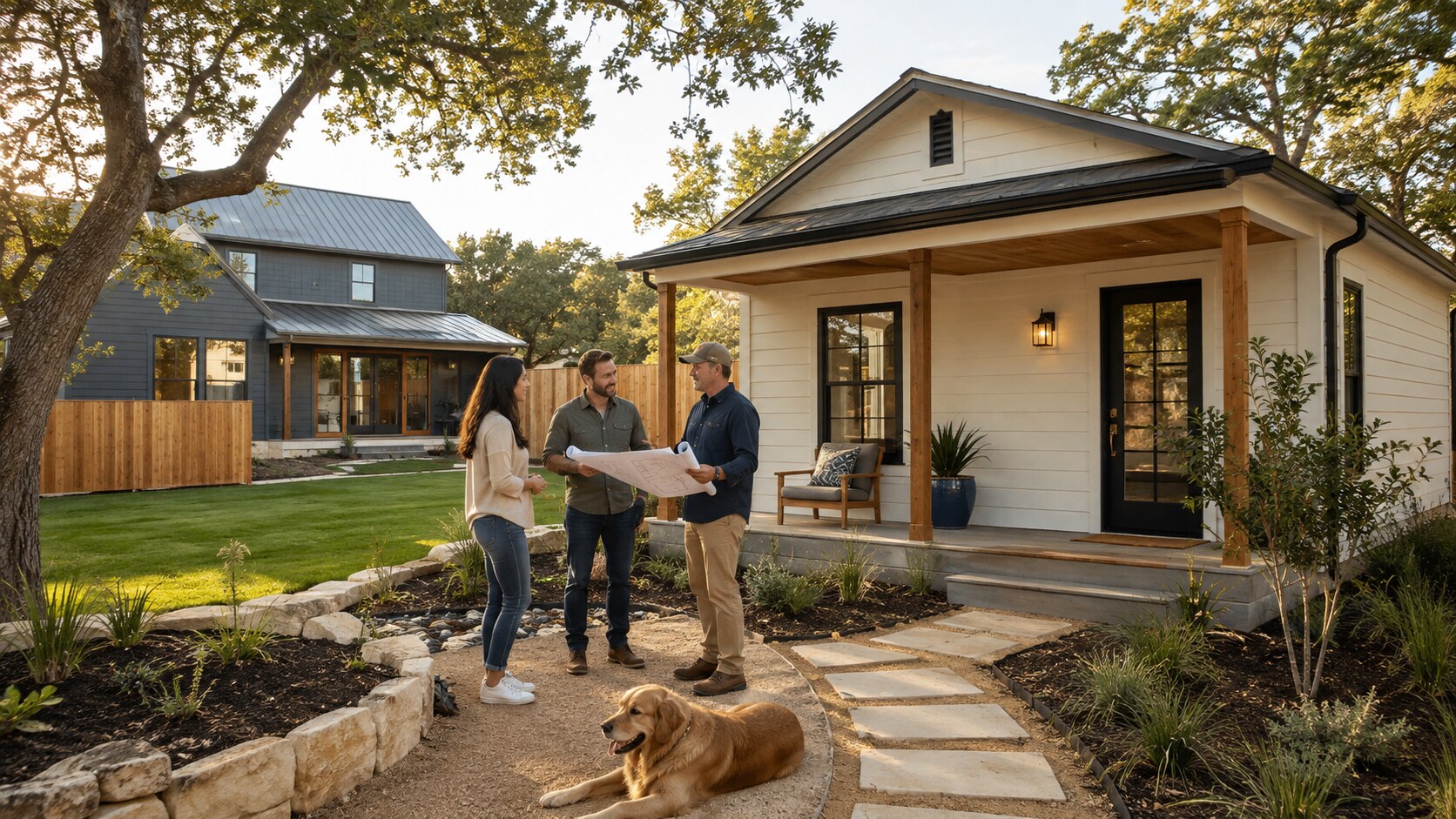
If you looked into adding a guest house, garage apartment, or backyard casita a few years ago and were told your lot didn't qualify — it's time to look again. Austin's HOME Initiative, passed in late 2023 and expanded in 2024, rewrote the rules for what can be built on a single-family lot, and it kicked off a genuine boom in accessory dwelling units (ADUs) across the city.
For homeowners, the opportunity is real: rental income, space for aging parents or boomerang kids, a dedicated home office or studio, and a meaningful boost to property value. But the details matter, and there are a few traps that catch people who assume the new rules apply everywhere. Here's a plain-English guide to Austin ADUs in 2026.
What Changed Under the HOME Initiative
The HOME Initiative represents the most significant overhaul of Austin's residential zoning in decades. The changes that matter most for homeowners considering an ADU:
- More units per lot. Many single-family lots in Austin can now hold up to three residential units — for example, a primary house, a detached ADU, and a third unit — subject to lot size and site constraints.
- Dramatically smaller minimum lot sizes. Lots that were previously considered too small for an ADU may now qualify. Thousands of properties in East, South, and Central Austin became eligible under the new rules.
- No more owner-occupancy requirement. You no longer need to live on the property to build or rent out an ADU — a major change that opened the door for more families and investors alike.
- Relaxed parking requirements. Smaller ADUs (generally under 550 square feet) require no dedicated off-street parking, and properties near major transit corridors may qualify for waivers.
The Rules That Still Apply
The new flexibility is real, but an ADU project still has to fit within Austin's development standards for your specific lot:
- Size caps. A detached ADU is generally limited to 1,100 square feet or a percentage of your lot area, whichever is smaller.
- Setbacks. Detached ADUs typically must sit at least 10 feet from the main house and respect rear and side setbacks that vary by zoning district.
- Impervious cover limits. Austin caps how much of your lot can be covered by buildings, driveways, and patios (commonly around 45% for single-family lots). On smaller lots, this — not the size cap — is often the binding constraint.
- Heritage tree protections. Austin's tree ordinance protects trees with trunks 19 inches in diameter or larger. If your backyard has big oaks or pecans, get a tree assessment before you fall in love with a site plan.
- Short-term rental limits. ADUs built after October 1, 2015 can generally only be used as short-term rentals for up to 30 days per year, and the city has been tightening short-term rental enforcement in 2026. If your plan is a full-time Airbnb, that's not what Austin's ADU rules are designed for. Long-term rentals, however, are fully permitted — and in strong demand.
The Trap That Catches the Most People: Deed Restrictions
This is the single most important caveat: private deed restrictions and HOA covenants override city zoning. Even if the City of Austin says your lot can hold three units, a neighborhood covenant banning ADUs or secondary structures wins. Before spending anything on design, have a title company or real estate attorney pull the deed history for your property. Floodplain status is the other independent constraint worth verifying early.
It's also worth noting that some HOME Initiative provisions have faced legal challenges. The rules are in effect as of this writing, but always confirm current zoning for your specific property with the City of Austin's Development Services Department before committing to a project.
What Does an ADU Cost in Austin?
Costs vary widely based on the approach:
- Garage conversions are typically the most cost-effective path, often landing in the range of $80,000–$120,000 depending on the condition of the structure and the finish level.
- Detached new-construction ADUs commonly run $150,000–$350,000 or more, depending on size, site conditions, utility connections, and finishes.
- Budget a cushion. Experienced ADU builders recommend adding 15–20% to base quotes for permits, utility hookups, design fees, and contingency.
On the income side, well-located Austin ADUs commonly rent for $1,500–$2,500 per month on long-term leases — which is why so many homeowners are running the numbers and moving forward.
Realistic Timeline
Plan for patience. Permitting alone commonly takes two to four months, and the full journey from feasibility review to certificate of occupancy typically runs 8–12 months. Working with designers and builders who have completed ADUs under the current rules — not the old code — makes a real difference in avoiding rejection-and-resubmit cycles.
A Smart First Step: The Feasibility Check
Before you hire an architect, verify the basics: your zoning designation (the city's free GIS Property Profile Map shows this), your lot size, your existing impervious cover, any deed restrictions, floodplain status, and protected trees. An hour of homework here can save you thousands in design fees on a project that was never buildable.
Thinking About an ADU or Garage Conversion?
House Doctors of Austin handles home renovation projects across the Austin area — including garage conversions, interior build-outs, and the long punch lists that turn an unfinished structure into a comfortable, rentable living space. We can also help you assess your property's condition and readiness before you commit to a larger project.
Call us at (737) 371-8827 or visit https://www.housedoctors.com/austin-tx/contact-us/ to talk through your project.
House Doctors of Austin is a locally owned and operated handyman, home repair, and home renovation service serving Austin and the surrounding Central Texas area.